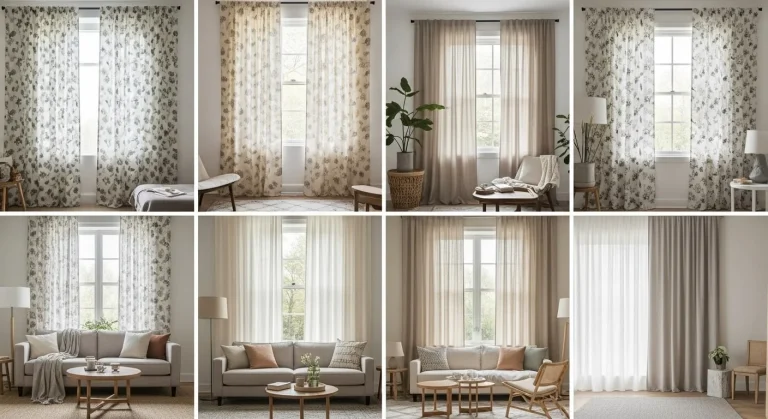

How to Pick Drapes for Living Room That Feel Right
There’s something about walking into a room and catching how the light filters through the drapes. It can make you stop. Not because it’s dramatic, but because it feels… right. Like the room is wearing exactly what it’s supposed to. Not too much, not too little.

But let’s not kid ourselves — choosing drapes for living room isn’t as breezy as it sounds. Between the patterns, the lengths, the fabrics, and your partner saying “just get something neutral,” it’s easy to freeze up and grab something forgettable. This is your way out of that.
Start With the Mood You Want
Every room has a vibe. Some are quiet and low-lit, others are where your friends end up on wine nights. Drapes help seal that tone in, more than most people realize.

If you want cozy and calm, think thicker, maybe a soft velvet or heavy cotton. Want something bright and awake? Go sheer or linen. The goal isn’t to match Pinterest. It’s to make your room feel like your version of lived-in.
Light Is Everything
How your living room faces the sun changes everything. South-facing rooms with tons of sun? You’ve got options. Play with layers. Sheers for the day, heavier ones for night.

If your space leans dark, don’t drown it in heavy blackout curtains. Use lighter drapes to invite whatever light you get. Sometimes, the illusion of openness is just as powerful as actual sun.
Color: The Sneaky Game-Changer
Neutral drapes are the safe bet, sure. But color is where the magic can happen — softly. Think rust against a greige wall, or a dusty blue in a white room. It adds just enough voice without shouting.

If you’re scared to commit, try colored tiebacks or a patterned inner layer. It’s like dipping your toe in without diving headfirst into the fabric pool.
Patterns Without Regret
A floral print might feel risky now, but done right? It’s the difference between a blank room and one that tells a story. Patterns add motion, especially if the rest of your room is toned down.

The trick is scale. Large prints need space to breathe. Tiny prints can look busy if crammed. And if your rug already has opinions, let your drapes speak in whispers.
Fabric That Feels Like Something
Some people touch drapes like they’re checking fruit at the market — and they’re right to. Fabric changes the whole mood. A soft, dense weave? Feels rich. A crinkled linen? Light, a bit undone, in the best way.

You want something that makes you want to touch it. Even if no one ever does, the room reads it. The subconscious registers softness, structure, or swish — and it reacts accordingly.
Length Matters (But Not Like You Think)
Most people go for standard lengths — just skimming the floor or pooling slightly. But those little decisions can quietly shape the vibe. Pooled drapes feel more relaxed, even romantic. Just-barely-there hems feel cleaner, more tailored.

It’s not about “rules.” It’s about how you want to feel walking into the room. If your cat’s going to sit on the hem anyway, you might as well make it part of the design.
Rods, Rings, and All That Hardware
People forget the curtain rod matters until they hang something beautiful on a rickety dollar-store pole. The rod is the jewelry of your drapes. You don’t need anything fancy — just solid, and in a finish that makes sense with your space.

Black works when you want contrast. Brass brings in warmth. Even the rings and clips change the silhouette of the drape. It’s detail work, but it shows.
Layering Adds Real Depth
One layer of drapes? Fine. Two? Now you’ve got drama. Sheers behind thick panels give you options — bright and breezy during the day, closed off and moody at night.

It’s not just visual. It’s emotional. Layers let your space shift with the light, the mood, the weather. You’re not locking in one feeling. You’re letting the room breathe.
Matching (Or Not Matching) the Rest of the Room
Drapes don’t have to match your sofa. In fact, when they don’t, they often do more work. Contrast brings interest. Unexpected pairings create depth.

But you do want some thread of connection — maybe the curtain pulls a color from your rug, or echoes the tone of your wood furniture. It doesn’t have to be obvious. It just has to be intentional.
Maintenance: The Thing No One Talks About
You know what’s not sexy? Dust. Or faded fabric. Your drapes are sitting there, catching sunlight and collecting air particles — they need a little TLC.

Choose something you’ll actually clean, or at least something that won’t disintegrate when you don’t clean it. Washable cottons, fade-resistant linens — these choices matter way more than the sales guy lets on.
When to Break All the Rules
There’s a case for wild drapes. Bright yellow in a serious room. Velvet in a mid-century setup. Stripes in a classic farmhouse. Sometimes, breaking the visual pattern is what makes the whole thing feel alive.

The only rule? If you love it, it works. The confidence of choosing something bold often becomes the design feature that makes the rest of the room make sense.
Final Thought: Drapes Aren’t Accessories
They’re part of the architecture of your room — a soft frame around the hard edges. They control how the space feels, even when they’re pulled back.

When you treat your drapes like an afterthought, the whole room ends up feeling unfinished. But when they’re chosen with care? That’s when everything clicks. Like a sigh of relief you didn’t know your room needed.