
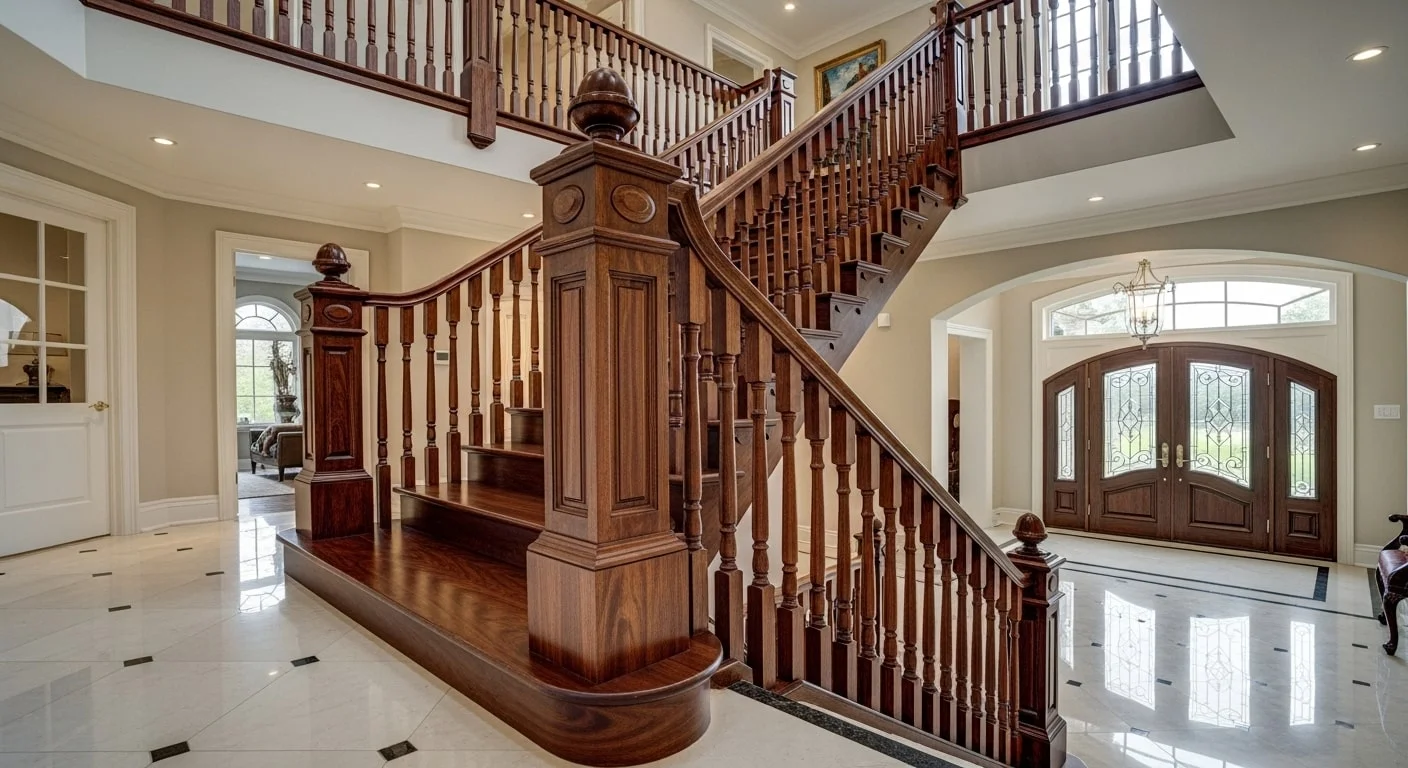
Stair Railings Enhance Your Home’s Architectural Style
Stair railings do more than add safety. They help you stay balanced on stairs. If you slip, they’re there for support. But they also add beauty and charm. A good railing feels right in hand. It guides you smoothly without extra effort. Some are wood, giving warmth and comfort. Others are metal, sleek and modern looking. The style you choose shapes the space. It’s not just a safety feature anymore. It becomes part of your home’s design. Railings also give confidence to kids and elders. They’re useful, stylish, and visually tie rooms together. A small detail that makes a big difference.
Types and Components of Railings
Stair Railings come in endless styles, fitting any home. The material you pick sets the tone and durability. Wood railings bring warmth, like a cozy cabin. Oak’s tough as nails; pine’s easier on the wallet. They’re perfect for classic or craftsman houses. Stain them to show off the grain. Just give them a little TLC now and then.

Metal railings scream cool, modern energy. Stainless steel laughs off rust; wrought iron’s full of character. They’re awesome for trendy lofts or sleek homes. They barely need upkeep—just a quick wipe. A powder-coated finish keeps corrosion at bay. Glass railings? Pure elegance. They make tight spaces feel bigger. Tempered glass is super safe, and frameless ones look like art. Just keep a cloth handy for smudges.

Cable railings are all the rage. Thin steel cables stretch across, keeping views wide open. They’re great for modern or airy spaces. Installing them takes some skill, though. Vinyl railings save cash and shrug off weather. They look like wood but skip the painting hassle. Wipe them down, and they’re good. Sun might fade them over time, though.

Railings have parts that work together. Handrails are what you hold—smooth, splinter-free, and just right. They’re set at a standard height for safety. Balusters fill the gaps, stopping anyone from falling through. They add style and follow strict spacing rules. Newel posts are the anchors, standing strong at the ends. Base rails keep balusters in line, finishing the look.
Stair Railings Design and Safety Considerations
Railings let you flex your style. A bold color or cool pattern can steal the show. They’re a chance to make stairs your own. Materials affect how they look and how much care they need. Wood’s got that classic, homey charm. Steel brings strength and a modern edge. Glass keeps things light and open. Your pick shapes your stairs for years.

Panel Stair Railings use solid panels instead of balusters. They wrap stairs fully, often in glass or metal. They’re perfect for modern homes craving natural light. Traditional homes can rock them for a clean vibe. Spiral railings twist with rings for a wow factor. Wrought iron ones add a touch of fancy to any staircase.

Safety’s the heart of railings. They turn small stumbles into no big deal. They’re a lifeline for kids, seniors, or anyone. Building codes lay down the law—handrails need to be grippy. They sit 34-38 inches high. Baluster gaps can’t be wider than 4 inches, keeping little ones safe. Always double-check local rules to stay in the clear.

Cable railings use tough metal cables. They’re strong but don’t hide your view. They work indoors or out. Measure railings straight up from stair edges. Keep them vertical to avoid tripping risks. Codes demand the right height. For wood handrails, sand them smooth. Stain brings out their beauty; paint lets you go wild with color.
Installation and Maintenance Tips
Railings polish off your staircase with style and safety. They show off your taste, from modern simplicity to warm wood details. Today’s railings are built to last, adapting to new rules. Pick a handrail that flows without breaks. It should feel good to hold, sitting at a comfy 34-38 inches.
Before you start, grab your tools—drill, screws, measuring tape. A level keeps things straight. Clear out plants or furniture for space. Mark where the handrail goes on the wall. Make sure top, bottom, and middle marks line up perfectly. That keeps your railing rock-solid.
Installing takes some planning. Measure your stairs carefully for a perfect fit. Set handrail height with precision. Check baluster spacing against codes. Cut materials cleanly with the right tools. Put handrails and balusters together snugly. Anchor newel posts so they don’t budge. Test it all before wrapping up. Stain wood for glow, paint metal for protection. Wipe glass for sparkle; tighten cables just right.
Keep railings fresh with regular care. Dust wood weekly, polish it sometimes. Seal outdoor wood yearly to fight weather. Check for splinters to keep hands safe. Wipe metal railings to keep them shiny. Spot rust early and touch up paint. Glass needs a quick clean with microfiber. Check cables for wear and keep them taut. Vinyl’s a breeze—just wash with soap. Watch for sun-fading and swap out worn bits.
Costs vary by what you choose. Wood’s $50-$150 per foot; oak’s on the high end. Metal runs $60-$200; stainless steel’s pricier. Glass hits $100-$300 for that luxe look. Cables are $80-$250, tricky to install. Vinyl’s a steal at $20-$80. Trends love simple glass or cable designs. Mixing wood and metal feels fresh. Bold black or bright colors make a statement. Go green with reclaimed wood or recycled steel.
Don’t skip codes, or you’ll face fines. Pick weather-tough materials for outside. Measure twice to avoid headaches. Keep up maintenance to save cash long-term. Shop at Home Depot or Lowe’s for deals. Online spots like Amazon ship fast. Local pros craft custom looks. Hire experts for tricky jobs; DIY if you’re handy. Check stair railings monthly for wobbles. Tighten bolts, replace anything broken. Clear stairs for safe steps.
Railings make stairs safe and stunning. Choose materials that vibe with your home. Keep them up for lasting beauty. Stick to codes for worry-free living. Your staircase will turn heads every time.


