

Why Beige Couch Living Room Ideas Just Make Sense
Beige doesn’t beg for attention. That’s part of its charm. It’s subtle, adaptable, and quietly confident. A beige couch gives you room to breathe, both visually and creatively. It’s not the loud centerpiece — it’s the canvas that lets everything else come to life.

If you’ve already got a beige sofa or are eyeing one in the store, the next step is building a space around it that feels layered — not flat. Beige isn’t boring unless you treat it like a default. With the right pairings, it becomes cozy, elevated, and a little bit timeless.
Pairing Colors with a Beige Couch Without Going Bland
The fear most people have is that beige-on-beige will feel like oatmeal wallpaper. And yes, it can. But contrast is your secret weapon. Try deep greens, charcoal, or even navy as a grounding shade. These darker tones make beige feel warmer and more intentional.

You don’t have to go bold if that’s not your thing. Even soft sage or dusty pink can create enough contrast to make the beige feel alive. The point isn’t to overwhelm it — it’s to let it breathe while giving it something to play off. That’s how you build visual interest without clutter.
Layering Textures Around a Beige Couch
One of the easiest ways to make a beige couch feel luxe is through texture. Think boucle pillows, wool throws, linen curtains. When everything is the same texture — even if it’s in a similar palette — the room can fall flat. But rough mixed with soft? Matte mixed with glossy? That creates depth.

Even rugs play a role here. A thick, shaggy wool rug in ivory or warm tones under your beige couch adds comfort and visual warmth. Add in a leather ottoman or a woven side chair, and suddenly your space has rhythm — not just color.
Styling Around Beige Without Making It Matchy
Here’s a trap to avoid: trying to match everything to the sofa. Beige doesn’t need more beige. It needs companions, not clones. A dark wood coffee table or even a marble-top side table can add the variation you didn’t know you needed.

Even artwork makes a difference. Abstract prints with warm tones, or black-and-white photography in wood frames, can shift the entire tone of the room. If your couch is understated, let the styling around it bring in the personality. It doesn’t have to match — it just has to make sense.
Throw Pillows That Actually Work with Beige
This is where beige becomes the ultimate blank slate. You can go seasonal — rust and olive in fall, muted blues in summer — or stick to a palette that just feels right year-round. The key is mixing patterns and solids, light and dark, soft and bold.

Even something as small as pillow shape matters. Long lumbar pillows feel modern. Overstuffed square ones lean traditional. Mix them. Let some texture sneak in — maybe one’s velvet, another is rough cotton, one’s a faded print. That’s how a beige couch becomes the grounding star of the room, not the background noise.
Lighting a Living Room with a Beige Sofa
Natural light makes beige glow. But if your space lacks it, then warm artificial light becomes your best friend. Avoid anything too cool or bluish — it’ll make your beige sofa look gray and dull. Soft white or golden tones are where the magic is.
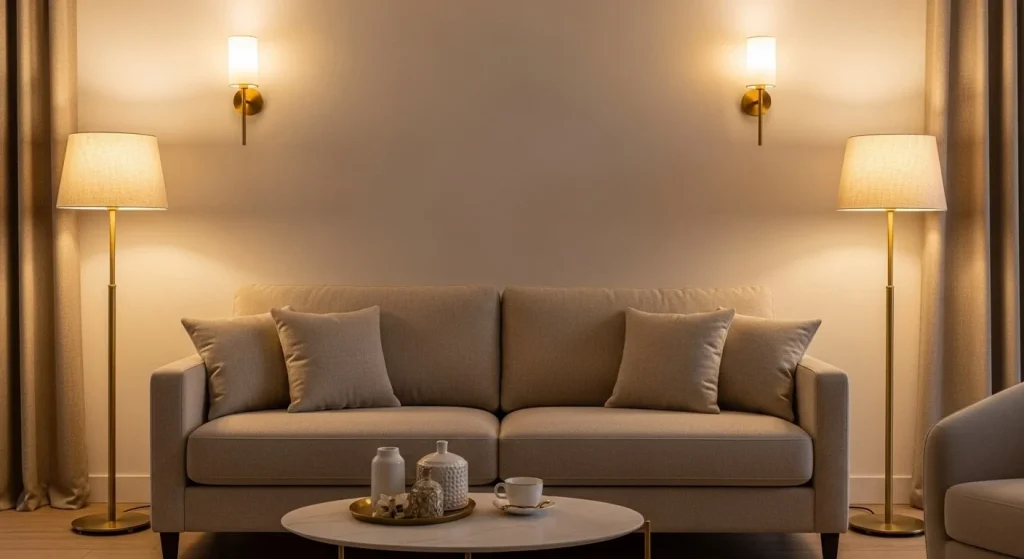
Add in floor lamps with linen shades or wall sconces with brass accents. These details warm the palette and add layers without stealing the show. Light isn’t just for visibility — it’s what gives beige its richness after sunset.
Wall Colors That Don’t Drown Out a Beige Couch
It’s tempting to stick with white walls when your couch is beige. And honestly, it works — if you break it up elsewhere. But if you’re open to more color, try warm neutrals like taupe, greige, or soft clay. They wrap the room in warmth without clashing.

If you want a little more contrast, darker tones can create a cozy cocoon effect. Deep olive or even muted navy behind a beige couch feels sophisticated and grounded. Just make sure to balance it with lighter elements — curtains, artwork, or a light rug — to keep the space from feeling too heavy.
Coffee Tables That Anchor the Room
A beige couch gives you freedom to go bold with your coffee table. Black, raw wood, even something sculptural — they all work. The couch fades into a neutral anchor, letting the coffee table take center stage.

Glass or metal tables can also lighten things up if the space is starting to feel too solid. It’s about balance. If your couch is soft and plush, let your table bring in clean lines or unique shapes. That tension — soft meets structured — makes the space feel alive.
Adding Greenery and Organic Shapes
Plants bring the kind of life that beige can’t fake. A tall fig tree, a cluster of succulents, even a trailing vine — they all pop beautifully against beige. The green doesn’t just break up the monotony; it highlights the warmth in the couch itself.

You don’t need to go jungle. Just a few intentional plants in textured pots (ceramic, woven, even concrete) can soften the edges. Organic shapes — curved mirrors, arched floor lamps, round cushions — also keep things from feeling too boxy or predictable.
When to Go Monochrome and When to Add Color
There’s a time for subtlety. Beige-on-beige with slight variations in tone can feel spa-like and serene. It works best in bright rooms where light can bounce off all those soft tones and create dimension naturally.

But sometimes, you need a pop. One mustard throw. One teal velvet chair. One bold art piece. That single surprise element — especially when everything else is calm — gives the room soul. Not chaos. Just character.
The Personal Layer: What Makes It Yours
This is the part the magazines don’t show. The weird thrifted lamp. The art from your cousin. The worn-out book you keep on the side table. Beige couches allow all those pieces to live together without clashing. They don’t demand the spotlight — they hold the space.

So, lean into that. Don’t rush to style it all at once. Let the room evolve. Move things around. Bring something in, take something out. A beige couch is like a good host — it lets everyone else shine.


